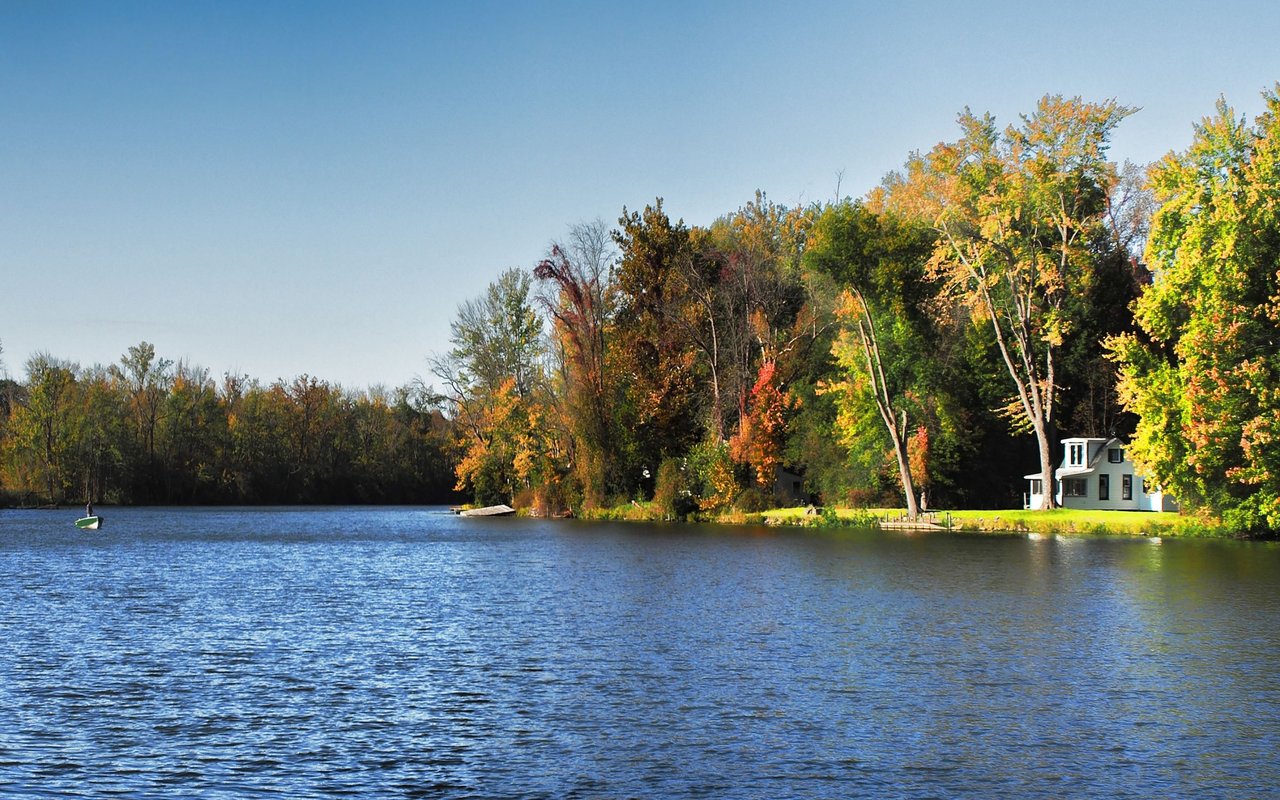
When a homeowner on Skaneateles Lake set out to replace a failing dock and rebuild the deck behind it a few years back, the project sounded straightforward: a contractor, some lumber, a few weeks of work. Instead, before a single board went into the water, the permitting alone took three months. That dock replacement had to clear four separate authorities: the Village of Skaneateles, the City of Syracuse, the New York State Department of Environmental Conservation, and the U.S. Army Corps of Engineers.
That detail rarely makes it into a listing description or a generic buyer's guide, and it's the reason a market that looks hotter by its headline price is actually moving slower underneath.
Four Agencies, One Dock
The City of Syracuse's involvement surprises most people who don't already live on the lake. Skaneateles Lake supplies Syracuse's unfiltered drinking water, so any shoreline work with runoff or water quality implications gets a second layer of review the city has a direct stake in.
| Agency | Why it's involved | What it reviews |
|---|---|---|
| Village of Skaneateles | Local zoning authority under the town's lakeshore regulations | Setback distance, structure footprint, special permit thresholds |
| City of Syracuse | Skaneateles Lake is the source of Syracuse's unfiltered drinking water | Runoff and water quality implications of shoreline work |
| NYS DEC | State jurisdiction over lake construction | Environmental impact of any shoreline structure |
| U.S. Army Corps of Engineers | Federal jurisdiction over navigable waters | Anything built into the water itself |
That stacked review is documented in a case study of a routine dock and deck rebuild, and it took three months front to back before construction even began.
The Size Lines That Decide How Many Signatures You Need
The Town of Skaneateles Lakeshore Regulations spell out exactly when a project needs the full review instead of a simpler local sign-off. Any shoreline structure within 50 feet of the lake line, or anywhere in the 100-year floodplain, triggers special permit requirements. Permanent docks over 200 square feet need one. So do decks or patios over 400 square feet, seawalls and retaining walls (unless set back 10 feet or more from the lake line), stairways taller than 25 feet, and boathouses.
A 400 square foot deck sounds generous until you picture it: roughly 20 feet by 20 feet, smaller than many primary bedrooms in the larger homes along West Lake Road and East Lake Road. That's the line a lot of ordinary renovation plans cross without anyone realizing it.
Projects that disturb 5,000 square feet or more of ground also require an erosion control plan under the same code. On a sloped lakefront lot, that threshold comes up faster than it sounds.
Septic Adds Its Own Clock
Because the lake is a drinking water source, county septic requirements here are the strictest in the region, stricter than properties near Oneida Lake, Owasco Lake, or Cayuga Lake. Waterfront parcels face larger setback distances and are far more likely to need an engineered system regardless of soil conditions.
Age matters just as much as location. Systems in the 25 to 30 year range are considered to be approaching the end of their useful life, and in 2025 the City of Syracuse and Cornell Cooperative Extension of Onondaga County mailed letters to watershed property owners whose onsite wastewater treatment systems were more than 30 years old. A watershed map going back to 1994 has tracked 135 septic violations on waterfront parcels alone.
There's a financial offset worth knowing about on both sides of a transaction: the state's Septic System Replacement Fund reimburses up to 50 percent of eligible upgrade costs, capped at $10,000, for qualifying watershed properties. The Skaneateles Lake Watershed program maintains current details on eligibility. For a seller with an aging system, that fund can turn a negotiation sticking point into a manageable line item. For a buyer, it's worth asking about before assuming a repair falls entirely on one side of the closing table.
What This Does to the Number Everyone Quotes
Here's where the transaction friction and the market data connect. Over the three months ending May 2026, the median sale price across Skaneateles sat near $949,000, up close to 11 percent from the same period a year earlier. A single-month snapshot in June 2026 showed the median closer to $994,000, up about 9.6 percent year over year. Read on its own, that looks like a market accelerating.
But the pace tells a different story. Average days on market climbed from 48 days a year earlier to 77 days this spring, the same window that produced the double-digit price gain. One filtered view of current inventory, Skaneateles's lakefront-specific listings, shows homes sitting for a median of 102 days. Not every portal agrees on the direction: a different snapshot from May 2026 put median days on market at just 31, down sharply from the year before. The discrepancy comes down to which slice of listings each source is counting and how the feed is refreshed, and it's a reasonable reminder that no single portal number should be read as the whole picture.
The most internally consistent read, price and pace measured over the same rolling window, shows both climbing together. That combination doesn't describe a broad market getting hotter. It describes a thin slice of large, slow-moving lakefront transactions pulling the median upward while homes are spending longer on the market. A rising median paired with rising days on market isn't what an aggressive bidding market looks like. It's what a market with a narrower buyer pool and property-specific diligence can look like: price gets set less by competing offers and more by land and frontage, while permit and septic paperwork can extend diligence after an offer is accepted.
What Actually Sets the Price on a Given Shoreline
Once you understand why the timeline stretches, the pricing logic on a specific parcel starts to make more sense too. Value per linear foot of frontage varies with slope, shoreline condition, and how easily a buyer can actually reach the water, not just the raw footage number. View orientation and proximity to the Village of Skaneateles carry premiums that a simple price-per-square-foot comparison won't capture. A private, permitted dock adds more value than informal or shared access, because the paperwork itself proves the buyer isn't inheriting someone else's unresolved permit history.
Interior square footage still matters, but on this lake it sits as a second layer on top of land value rather than the primary driver. Two homes with similar living space can carry very different prices once frontage, dock rights, and system age are factored in.
What to Budget For on Either Side
If you're preparing to sell a lakefront property, the permitting and septic timelines argue for starting early. Permit review alone can run three months, and a lender will want clean documentation on both dock rights and septic history before closing. Late winter is a realistic point to start gathering records if a spring listing is the goal.
If you're buying, ask for dock permit records and septic age documentation before your inspection period closes, not after. A system that's technically functioning but sitting at 28 years old is a different conversation than one installed five years ago, and the difference is easy to miss if the paperwork request comes late.
Either way, a slow-moving Skaneateles sale isn't necessarily a sign of buyer hesitation. On the shoreline, the calendar is often set by agencies and inspections rather than demand.
Common Questions
Does every dock on Skaneateles Lake need a permit? Only structures above the size thresholds in the town's lakeshore regulations, generally 200 square feet for permanent docks and 400 square feet for decks or patios, or anything within 50 feet of the lake line or inside the floodplain. Temporary docks are generally exempt from these dimensional rules.
How old does a septic system need to be before it becomes a real issue in a sale? Local guidance points to the 25 to 30 year range as the point where systems approach the end of their useful life, and the watershed program sent notices to owners of systems over 30 years old in 2025.
Is the septic replacement fund available to every homeowner near the lake? It's a program tied to designated watershed properties and administered at the county level, reimbursing up to half of eligible costs up to $10,000. Confirm current eligibility with the program directly before counting on it in a transaction timeline.
A dock rebuild and a decades-old septic tank rarely show up on a listing sheet, but they're often what actually sets the calendar for everyone at the closing table. If you're weighing a purchase or a sale on Skaneateles Lake and want a clear read on what a specific parcel's permit and system history actually means for your timeline, Andréa Price can walk through it with you. Explore more on the Skaneateles neighborhood page or reach out directly to start the conversation.
This article is general information, not legal, tax or financial advice. Consult a qualified professional about your situation.